 EN
EN

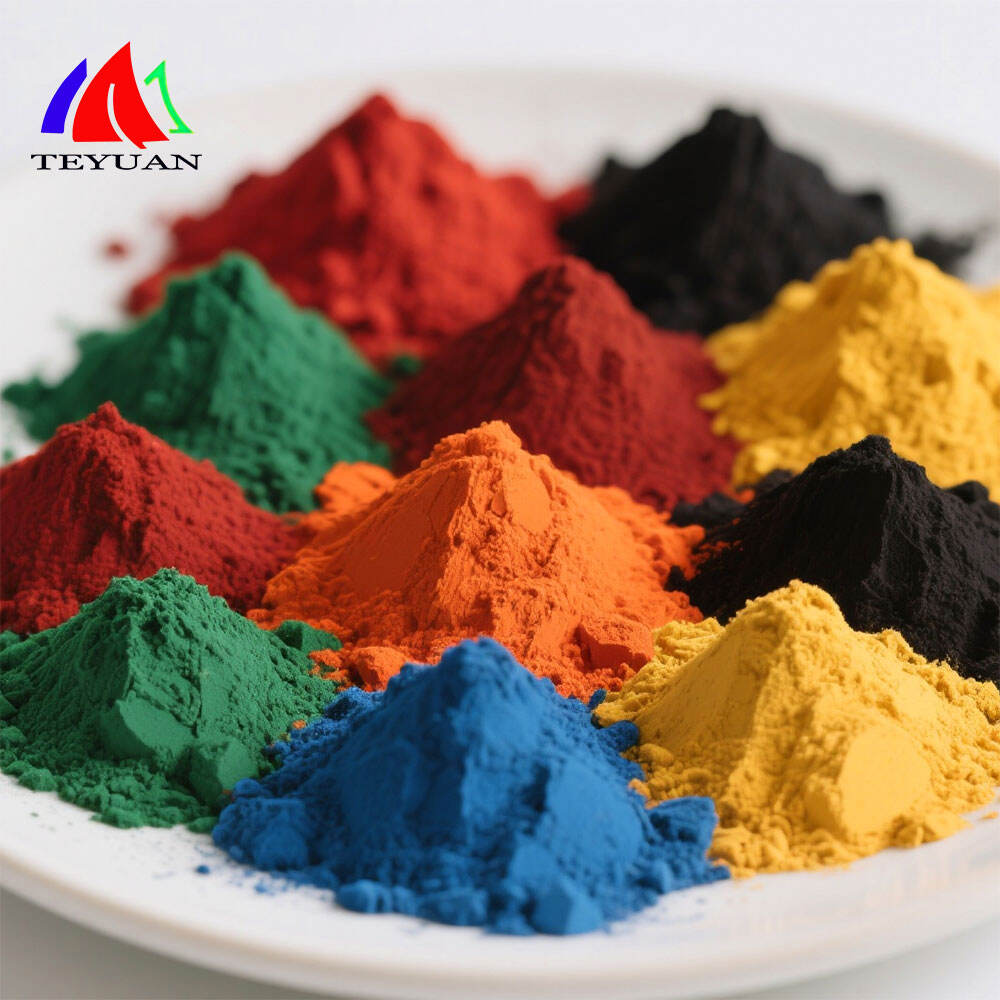
Pigments serve as the fundamental building blocks of color across virtually every industry, from traditional artistic endeavors to large-scale manufacturing operations. These microscopic particles possess unique properties that allow them to impart vivid, lasting colors to countless materials while maintaining structural integrity and performance characteristics that synthetic alternatives often cannot match. Understanding why pigments hold such a crucial position in color technology reveals the intricate relationship between chemistry, physics, and human perception that drives modern color applications.
The foundational role of pigments extends far beyond simple aesthetics, encompassing critical functional properties that determine product performance, longevity, and market viability. From the iron oxide pigments that provide weather resistance in construction materials to the organic compounds that create brilliant hues in automotive coatings, these substances represent millennia of human innovation in color technology. Their unique ability to selectively absorb and reflect specific wavelengths of light while maintaining chemical stability makes them irreplaceable components in modern manufacturing processes.
The Chemical Foundation of Pigment Color Production
Molecular Structure and Light Interaction Mechanisms
Pigments achieve their foundational role in color production through sophisticated molecular structures that interact with light in predictable and controllable ways. The chromophore groups within pigment molecules contain specific electron configurations that absorb certain wavelengths of visible light while reflecting others, creating the perceived color phenomenon. These molecular arrangements remain stable under various environmental conditions, ensuring consistent color reproduction across different applications and time periods.
Iron oxide pigments exemplify this principle through their crystal lattice structures, which create characteristic red, yellow, and black colors depending on the iron oxidation state and crystal arrangement. The stability of these molecular structures explains why ancient cave paintings using natural pigments retain their vibrancy after thousands of years, demonstrating the inherent reliability that makes pigments fundamental to color technology.
The selective absorption properties of pigments also enable precise color matching and reproduction, essential capabilities in manufacturing environments where color consistency directly impacts product quality and brand recognition. This molecular-level control over light interaction distinguishes pigments from other coloring methods and establishes their position as the primary foundation for professional color applications.
Particle Size and Surface Area Effects
The physical dimensions of pigment particles significantly influence their color-producing capabilities and application performance characteristics. Smaller particle sizes generally produce more intense colors due to increased surface area and improved light scattering efficiency, while larger particles may offer better opacity and coverage properties. This relationship between particle size and color intensity allows manufacturers to fine-tune pigment formulations for specific application requirements.
Surface area considerations also affect how pigments interact with binding materials and substrates, influencing adhesion, durability, and processing characteristics. The optimization of particle size distribution enables pigment manufacturers to create products that balance color intensity with practical application properties, ensuring that the fundamental color-producing function remains effective across diverse manufacturing conditions.
Advanced grinding and classification techniques allow precise control over pigment particle characteristics, enabling the production of specialized grades for specific applications. This technical sophistication in particle engineering reinforces the foundational importance of pigments by ensuring their compatibility with modern manufacturing processes and performance requirements.
Industrial Applications Demonstrating Pigment Fundamentality
Construction and Building Materials Integration
The construction industry demonstrates the foundational importance of pigments through widespread integration in concrete, cement, and architectural coatings where color serves both aesthetic and functional purposes. Pigments provide permanent coloration that withstands extreme weather conditions, UV radiation, and chemical exposure while maintaining structural integrity of the host material. This dual functionality establishes pigments as essential components rather than optional additives in construction applications.
Concrete coloring applications particularly highlight why pigments serve as the foundation for architectural color schemes, as they become permanently integrated into the material structure during mixing and curing processes. The chemical compatibility between inorganic pigments and cement matrices ensures long-term color stability without compromising mechanical properties, demonstrating how fundamental pigment characteristics align with industrial performance requirements.
Building envelope applications rely on pigmented coatings and materials to provide thermal management properties alongside aesthetic appeal. Light-colored pigments reflect solar radiation to reduce cooling loads, while darker pigments may absorb heat for passive warming effects, illustrating how the fundamental light-interaction properties of pigments serve multiple functional purposes in modern construction design.
Automotive and Transportation Color Systems
Automotive manufacturing showcases the critical foundational role of pigments through sophisticated multi-layer coating systems that must deliver precise color matching, durability, and protective performance. The basecoat-clearcoat systems used in modern automotive finishes depend entirely on pigments for color development, with metallic and pearlescent effects created through specialized pigment formulations that manipulate light reflection and refraction patterns.
Color matching requirements in automotive applications demand exceptional consistency from pigment suppliers, as vehicle manufacturers must maintain identical colors across different production facilities and time periods. This requirement demonstrates how the fundamental properties of pigments enable global manufacturing coordination and brand identity maintenance through reliable color reproduction capabilities.
Safety applications in transportation further emphasize pigment fundamentality through high-visibility coatings and markings that must maintain color intensity under harsh environmental conditions. Fluorescent and retroreflective pigments provide enhanced visibility properties that cannot be achieved through alternative coloring methods, establishing their essential role in transportation safety systems.
Artistic Applications Revealing Pigment Significance
Traditional Fine Arts and Historical Continuity
Traditional fine arts demonstrate the foundational nature of pigments through centuries of artistic achievement built upon pigment technology, from Renaissance masterpieces to contemporary installations. Artists have consistently relied on pigments for their ability to create precise color relationships and maintain long-term stability, properties that remain unmatched by alternative coloring systems. The extensive historical record of pigment usage in art provides compelling evidence of their fundamental importance in human color expression.
Pigment selection in fine arts involves understanding both aesthetic and technical properties, as artists must consider lightfastness, chemical compatibility, and handling characteristics alongside color appearance. This technical knowledge requirement illustrates how pigments serve as sophisticated tools rather than simple coloring agents, requiring expertise to achieve optimal results in artistic applications.
Conservation science relies heavily on pigment identification and analysis to understand artistic techniques and preserve cultural heritage, demonstrating how these materials form the technical foundation of artistic expression. The ability to analyze pigment compositions in historical artworks provides insight into artistic practices and technological development across different cultures and time periods.
Modern Digital and Mixed Media Integration
Contemporary art practices increasingly combine traditional pigment-based media with digital technologies, highlighting how pigments remain relevant in evolving artistic landscapes. Mixed media installations often rely on pigmented materials to provide physical color presence that complements digital projections and electronic displays, demonstrating the continued importance of material-based color in artistic expression.
Printmaking applications showcase pigment versatility through specialized formulations designed for different printing processes, from traditional lithography to modern digital printing systems. The adaptation of pigment technology to support new artistic techniques reinforces their foundational role by enabling creative expression across evolving media platforms.
Educational art programs continue to emphasize pigment knowledge as fundamental to understanding color theory and practice, ensuring that future artists and designers appreciate the technical foundations underlying color applications. This educational emphasis maintains the cultural significance of pigments while preparing new generations to innovate within established color technology frameworks.
Performance Characteristics That Define Pigment Fundamentality
Lightfastness and Environmental Durability
Lightfastness represents perhaps the most critical performance characteristic that establishes pigments as foundational to color technology, as this property determines long-term color stability under real-world conditions. Pigments achieve superior lightfastness through molecular structures that resist photochemical degradation, enabling applications where color permanence is essential for product functionality and aesthetic appeal.
Environmental durability testing demonstrates how pigments maintain color integrity across temperature cycles, humidity variations, and chemical exposure scenarios that would degrade alternative coloring methods. This comprehensive stability profile makes pigments the preferred choice for applications where color failure would compromise product performance or safety requirements.
Accelerated weathering protocols used in pigment evaluation simulate decades of environmental exposure in compressed timeframes, providing manufacturers with confidence in long-term color performance. The ability of pigments to pass these rigorous testing requirements reinforces their status as the fundamental solution for permanent color applications across diverse industries.
Chemical Compatibility and Processing Advantages
Chemical compatibility between pigments and various binding systems enables their integration into countless manufacturing processes without compromising either color quality or material properties. This broad compatibility stems from the chemical inertness of many pigment formulations, which allows them to coexist with reactive components during processing while maintaining color integrity.
Processing advantages of pigments include heat stability during high-temperature manufacturing operations, resistance to pH variations in aqueous systems, and compatibility with diverse solvent systems used in industrial applications. These characteristics enable pigment integration into manufacturing processes that would be incompatible with less stable coloring alternatives.
Quality control systems in pigment manufacturing ensure batch-to-batch consistency that supports automated production processes and statistical quality management approaches. This reliability enables manufacturers to specify pigments with confidence in achieving consistent results across large production volumes and extended time periods.
FAQ
What makes pigments more reliable than dyes for long-term color applications?
Pigments offer superior reliability for long-term applications due to their insoluble nature and stable molecular structures that resist fading, bleeding, and chemical degradation. Unlike dyes, which dissolve in their application medium and can migrate or react with other components, pigments maintain their particle integrity and color properties over extended periods. This fundamental difference in behavior makes pigments the preferred choice for applications requiring permanent coloration.
How do pigments maintain color consistency across different manufacturing processes?
Pigments maintain color consistency through standardized production methods that control particle size distribution, surface treatment, and chemical purity to precise specifications. Quality management systems ensure that each batch meets established color standards through spectrophotometric analysis and comparative testing. The inherent stability of pigment particles allows them to retain their color properties regardless of the specific manufacturing process used in the final application.
Why are iron oxide pigments particularly important in construction applications?
Iron oxide pigments excel in construction applications because they offer exceptional weather resistance, chemical inertness, and compatibility with alkaline cement matrices. These pigments provide permanent coloration that withstands UV radiation, temperature extremes, and moisture exposure without compromising the structural integrity of concrete or other construction materials. Their natural origin and non-toxic properties also make them suitable for applications where environmental safety is a primary concern.
Can synthetic alternatives replace traditional pigments in industrial applications?
While synthetic alternatives continue to develop, traditional pigments remain essential for applications requiring proven long-term performance, regulatory approval, and cost-effectiveness. Synthetic options may offer advantages in specific applications, but the comprehensive performance profile, established supply chains, and extensive application knowledge associated with traditional pigments make them difficult to replace entirely. Most industrial applications benefit from the reliability and predictability that established pigment technologies provide.
Table of Contents
- The Chemical Foundation of Pigment Color Production
- Industrial Applications Demonstrating Pigment Fundamentality
- Artistic Applications Revealing Pigment Significance
- Performance Characteristics That Define Pigment Fundamentality
-
FAQ
- What makes pigments more reliable than dyes for long-term color applications?
- How do pigments maintain color consistency across different manufacturing processes?
- Why are iron oxide pigments particularly important in construction applications?
- Can synthetic alternatives replace traditional pigments in industrial applications?